
Functional Is Not Finished
 Maria Quiroga
- Client
- Lilly's Authentic Indian Cuisine
- Industry
- Restaurant & Hospitality
- Timeline
- Apr – Jul 2026
- Services
- Website Design & Development, Information Architecture, UX Copywriting
- Live site
- lillysindia.com
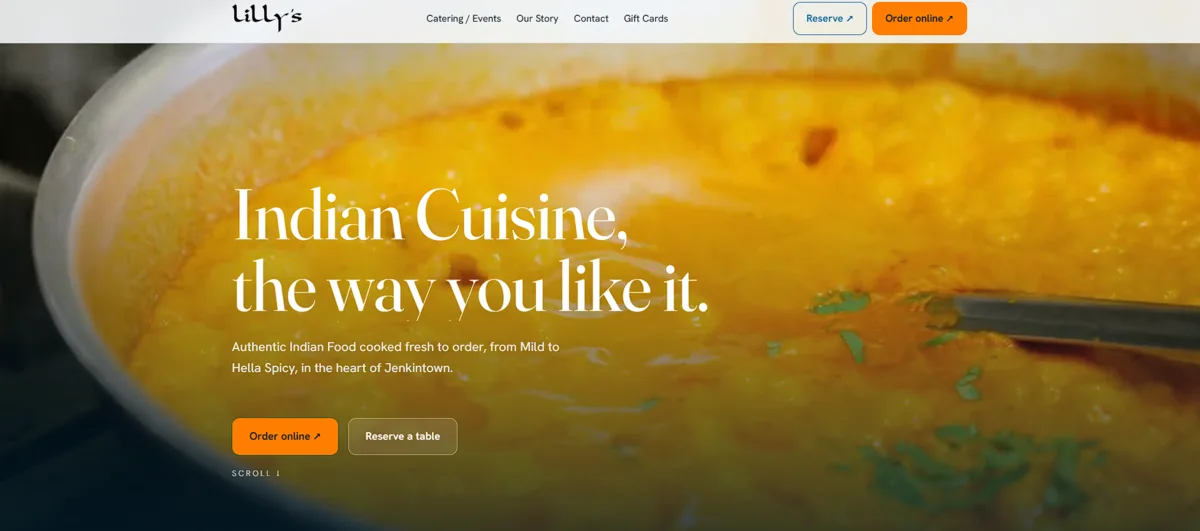
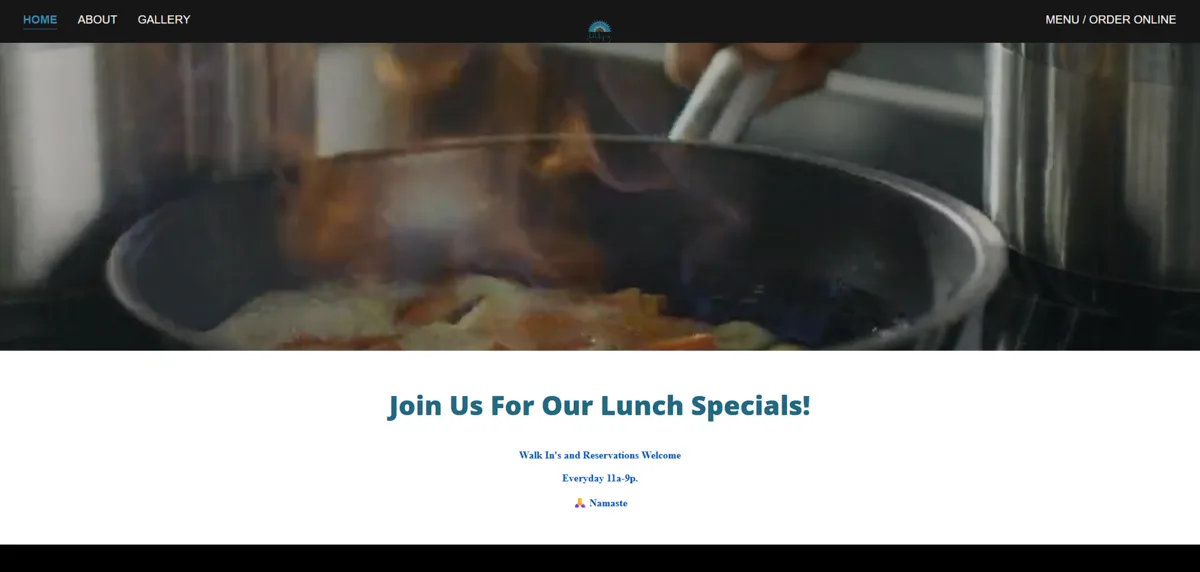 Before
After
Before
After
There is a specific kind of website that never gets flagged as a problem, because nothing on it is technically wrong. The hours are correct. The address links to Google Maps. There’s a phone number, a contact form, and a button that says “Menu / Order Online.” Every question a visitor might type into their phone standing outside the restaurant gets answered. Nobody would call the site broken.
One of our clients, an Indian cuisine restaurant, had exactly that site for years. Three pages, built on a basic website builder, doing the bare minimum with total competence. And the whole time, none of it told anyone why the restaurant mattered.
The owner had opened the place as a tribute to his mother, building a menu that moves across five regional Indian culinary traditions rather than flattening them into one generic version of “Indian food.” That is a real story, the kind a lot of businesses would pay a strategist to invent from scratch. It was sitting right there, unused, while the website did its quiet, correct, forgettable job of listing operating hours.
The gap a functional site never shows you
The old site wasn’t failing at anything it was trying to do. That’s the part worth sitting with. It had no brand story, no events or catering section, no reservation flow, and no visual identity, and none of that registered as a failure in the normal sense, because a contact form and a menu link will get a hungry person through the door on a Tuesday regardless. The site converted just enough people, often enough, that nobody was forced to ask what it was leaving on the table.
That is not a technology problem. That is a strategy problem wearing a technology costume.
The thing worth naming here is that a website can clear every functional bar, correct information, working links, no bugs, and still be almost entirely empty of the thing that actually drives a restaurant’s growth: a reason to come back, a reason to book the office party there instead of somewhere else, a reason to tell a friend. This restaurant’s site had gotten very good at answering questions nobody was really asking, while never once making a case for itself.
What the rebuild was actually for
The engagement ran a few months, start to finish, and it went toward strategy, information architecture, UX copywriting, design, and development in sequence, not toward any single one of those things stretched out for no reason. The site grew from three pages to five: a homepage carrying the restaurant’s fresh-to-order positioning and a teaser for catering, an origin-story page built entirely around the owner’s history and the restaurant’s roots in its community, a Catering and Events hub with real packages and a reservation flow, a dedicated Gift Cards section, and a Contact page that finally sits inside a site with something to say before it asks for a phone call.
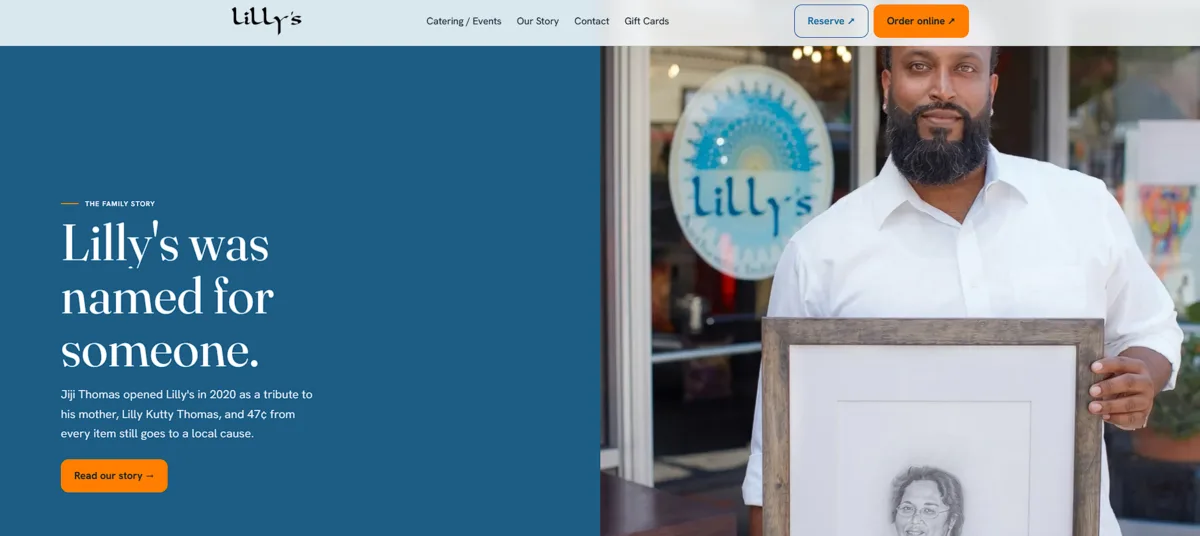
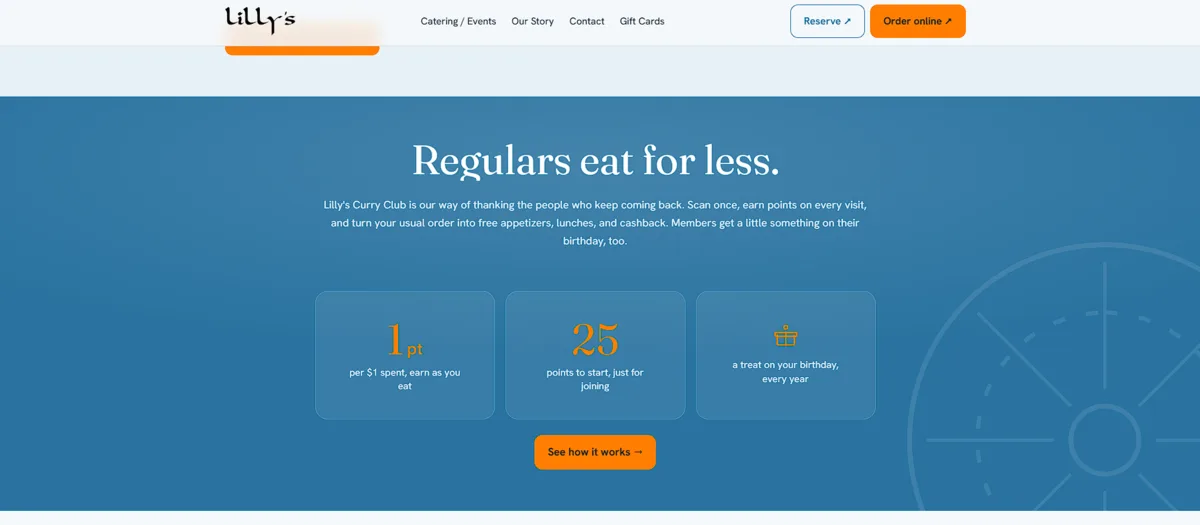
None of that comes together in a week, and it shouldn’t. Capturing a family story accurately takes actual conversation with the family, not a single intake questionnaire. Getting the copy voice right, a line like “the way you like it, from mild to hella spicy,” the kind that sounds like it came from someone who has actually worked the line, takes rounds of drafts and real feedback, not a first pass approved on the spot. Building a loyalty program that rewards regulars with points per dollar and a birthday treat, and connecting online ordering, reservations, and gift cards directly into the restaurant’s existing point-of-sale system, takes integration work that has to be right the first time, because a broken order flow costs a restaurant more than a plain one ever would.
That work happened on both sides of the relationship. Spritz My Duck brought the process, the sequencing from strategy through build rather than jumping straight to design. The restaurant’s owner and his team brought the material that made the site worth building at all, sitting through copy reviews, pulling together photos and menu detail, saying yes or no to drafts until the voice actually sounded like the restaurant. A deliberate timeline without that kind of client engagement is just a slow project. With it, the time is doing something.
The difference between slow and unhurried
It would be easy to read a months-long engagement for a five-page site as evidence of a bloated process, and sometimes that read would be fair. The distinction that actually matters is what the time was spent on. A project drags when nobody is deciding anything and every round of feedback reopens questions that were supposedly settled two weeks earlier. A project takes real time when it’s building things that have to hold up under actual use: a loyalty program that has to calculate points correctly, a reservation flow that has to talk to a point-of-sale system without dropping bookings, a brand voice that has to sound like a real kitchen and not like a template with the restaurant’s name swapped in.
This engagement’s timeline was the second kind. Nothing about the delivery date reflects indecision. It reflects a project that had five real destinations to build instead of one landing page to refresh, and a client willing to put in the time each of those destinations actually required.
If your site is technically fine
If your website loads correctly, lists the right hours, and hasn’t broken in a way anyone’s noticed, it is worth asking a slightly different question than whether it works. Ask whether it’s doing anything. A site can be entirely functional and still be strategically silent, no story, no reason to return, no path from a first visit to a loyal one, and that gap tends to stay invisible for exactly as long as the business keeps getting by without it.
The standard, restated
This restaurant didn’t need a faster website. It needed a website that finally matched what was actually happening in the kitchen, a family story, a real point of view on the food, and a set of tools, catering, gift cards, loyalty, that turn a one-time visitor into a regular. Building that took real time, not because the process was slow, but because the material was real and deserved the care of getting it right.
At Spritz My Duck, this is the standard we hold ourselves to: we match the pace of a project to what it’s actually building, and we don’t mistake a fast launch for a finished one, or a finished one for a fast launch. Some projects need four weeks. Some need the better part of a season. The job is knowing which one you’re in.